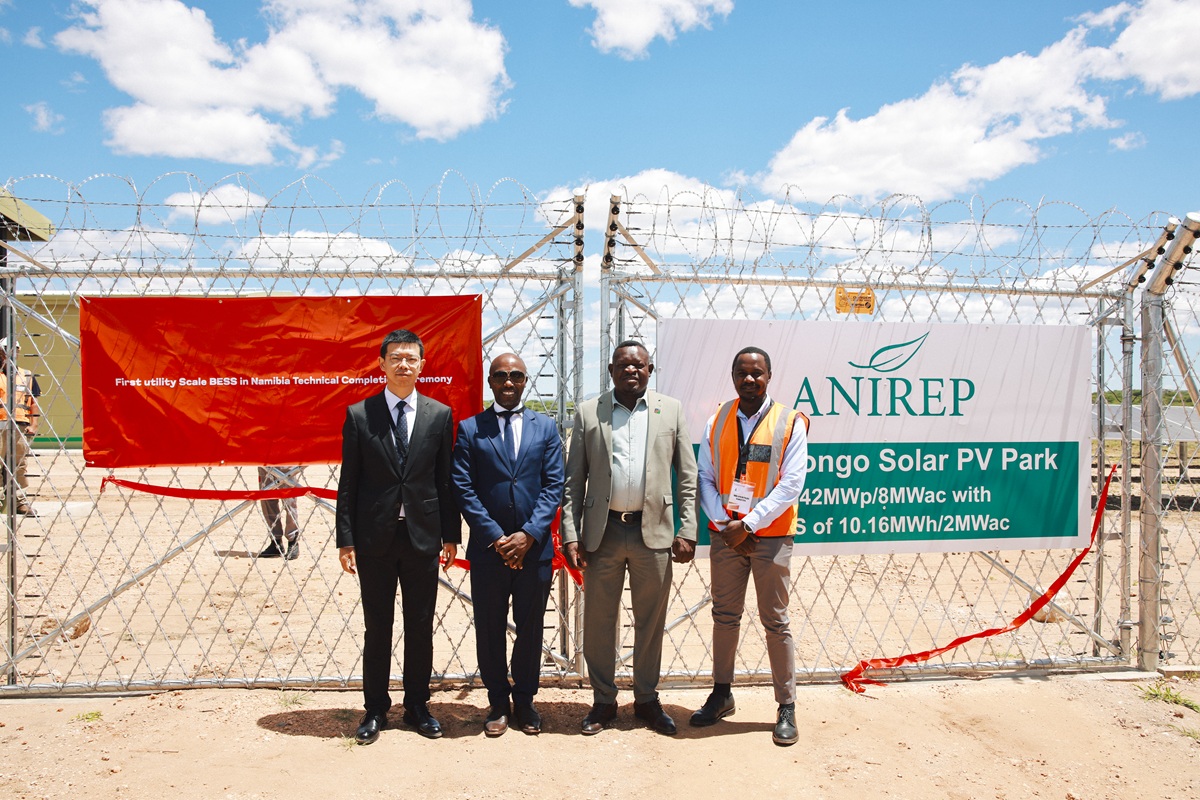
1ST NAMIBIA ULITITY SCALE BESS 3MW/10mwh Tied To Expanded 13.42MWpSolar PV at OTJIWARONGO
The morning unfolded with a sense of pride and anticipation as honoured guests, government representatives, energy sector partners and the wider community gathered for the technical unveiling of Namibia’s first utility‑scale Battery Energy Storage System at Otjiwarongo. ANIREP’s Managing Director, Iyaloo ya Nangolo, stepped forward to mark the moment, reflecting on what this achievement truly represents—not just an engineering feat, but a meaningful stride in Namibia’s ongoing energy transition. With the commissioning of the 3MW / 10MWh storage system, integrated with the expanded 13.42MWp solar PV plant, the country moves deeper into a future powered by clean, reliable and affordable energy.
He reminded the audience that the Otjiwarongo solar plant’s story began more than a decade ago. When it first went online in 2015, it became Namibia’s first grid‑connected solar plant and marked the private sector’s early involvement in diversifying the national energy mix. Back then, its tariff model—aligned with the REFIT programme era—was structured with a CPI plus 5% escalation. Over time, this model began to strain the cost of electricity. By 2020, the tariff had reached N$1.87 per kilowatt-hour. Recognising that renewable energy had matured and costs were falling globally, ANIREP chose a path guided not by obligation, but by principle. The company voluntarily reduced the escalation to CPI only, easing the potential burden on communities and their off‑taker, CENORED. Had that decision not been made, the tariff would have climbed to an estimated N$3.13 per kilowatt-hour today.
Yet even principled decisions do not freeze time. By 2023, the tariff had once again risen to N$1.96. This sparked a new question within ANIREP: how could they ensure that renewable energy continues to deliver real and sustainable value to the communities it serves? The answer was bold. ANIREP proposed lowering the tariff further to N$1.34 per kilowatt-hour, with fixed escalation, in exchange for expanding the plant to improve efficiency and performance. That proposal planted the seed for the project celebrated today.
The fruits of that collaboration were now visible. With the expanded solar facility working in harmony with the new Battery Energy Storage System, the plant could deliver more power at lower cost while enhancing the resilience and reliability of the local electricity network. The Managing Director explained how the battery transforms the capabilities of solar energy. While generation peaks during the day, the needs of households and businesses often peak in the evening. The battery bridges this gap by storing excess solar energy and releasing it when the community needs it most. It supports peak shaving, smooths load curves, stabilises the grid and ensures energy remains dependable even when the sun has set. With this project, Namibia steps into a new era—one where renewable energy is not just clean and affordable, but dispatchable and intelligently integrated.
As the audience listened, it became clear that the project’s success was rooted in partnership. ANIREP, CENORED, EMCON, HopSol, regulators, financiers and policymakers had worked together to demonstrate what collaborative effort can achieve: reduced costs, expanded capacity and a more resilient energy system. This project, the first of its kind in Namibia, positions the nation alongside global leaders adopting battery storage as a cornerstone of modern power systems.
In closing, the Managing Director extended deep appreciation to all who played a role in bringing the project to life—CENORED, NamPower, ECB, Huawei, HopSol Africa, EMCON, consultants, subcontractors, Mr Braam Vermeulen, the boards of ANIREP Solar and ANIREP, and the dedicated ANIREP team. Their collective commitment continues to drive Namibia closer to a secure and sustainable energy future.
"ANIREP" Alpha Namibia Industries Renewable Energy Power Limited was established for the purpose of facilitating the investment of long-term capital in infrastructural renewable energy projects in Namibia and Sub-Sahara Africa.